Wildlife Conservation and Disaster Management in Context of Diminishing Water Bodies
What happened
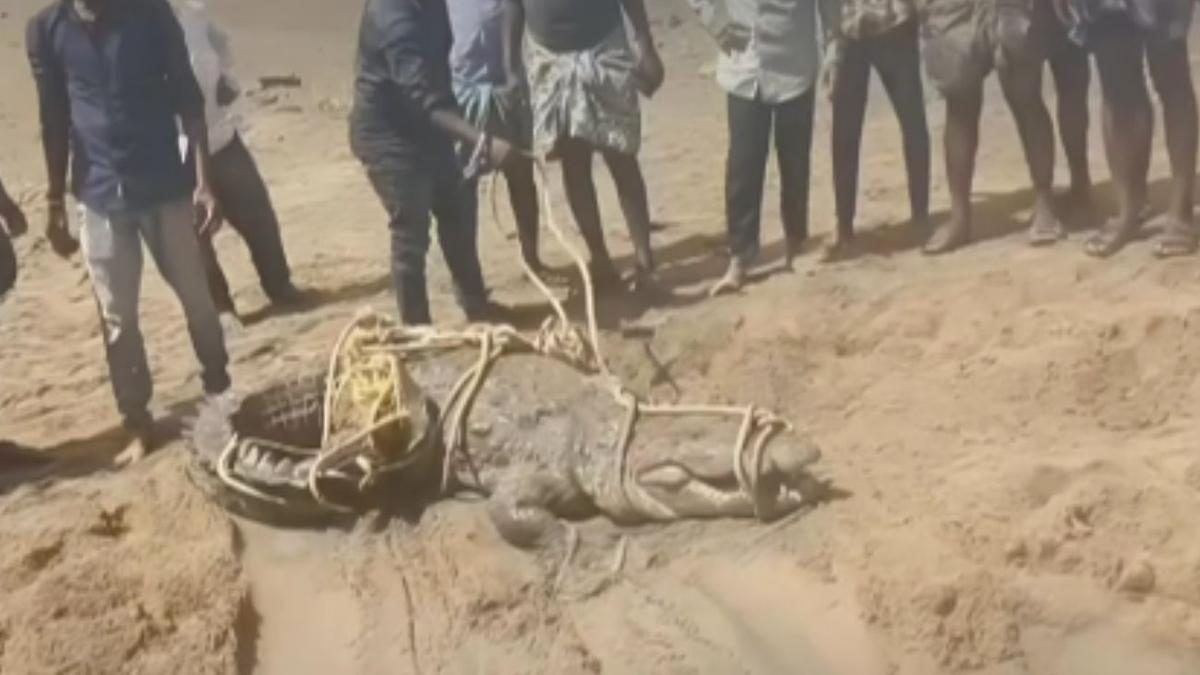
In early September 2026, villagers in Meliganur, Andhra Pradesh, were seen dragging and beating a mugger crocodile that had been driven ashore by the sinking Tungabhadra River. The local forest department intervened, warning residents against harming the crocodiles, which are protected under the Wildlife Protection Act, 1972. As water levels continue to drop due to poor rainfall, more crocodiles are emerging, prompting authorities to remind the public of the legal repercussions of harming these animals.
Key takeaways
- Crocodiles are protected under Schedule I of the Wildlife (Protection) Act, 1972 — This highlights the legal framework in place for wildlife conservation in India.
- Harming protected species can lead to severe penalties, including imprisonment for up to seven years — This underscores the importance of legal protections in wildlife conservation efforts.
- The decrease in water levels due to climate factors can lead to increased human-wildlife conflicts — This illustrates the need for effective disaster management strategies that consider wildlife habitats.
- Public awareness and education are crucial in preventing harm to wildlife during environmental crises — This emphasizes the role of community engagement in conservation efforts.
- The intervention by the forest department and rescue operations by organizations like HANUMAN demonstrate proactive wildlife management — This reflects the importance of institutional responses in mitigating human-wildlife conflicts.
Conceptual analysis
The incident involving the mugger crocodile in Andhra Pradesh serves as a critical example of the intersection between wildlife conservation and disaster management. As water bodies like the Tungabhadra River shrink due to inadequate rainfall, wildlife is increasingly forced into closer proximity with human populations, leading to potential conflicts. The Wildlife (Protection) Act, 1972, provides a legal framework for the protection of species such as crocodiles, which are classified under Schedule I, indicating their high conservation priority. The law imposes strict penalties for harming these animals, reflecting the need for robust legal measures to safeguard biodiversity. Furthermore, the response of local authorities, including public advisories and rescue operations, illustrates the importance of institutional frameworks in managing wildlife during environmental crises. This situation highlights the necessity for public awareness and education to prevent harm to wildlife and promote coexistence, especially in the face of climate change and its impact on natural habitats. Overall, effective disaster management strategies must incorporate wildlife conservation principles to ensure both human safety and the protection of endangered species.
Concept explainers
An Indian law aimed at protecting wild animals, birds, and plants, establishing schedules for the protection of endangered species.
A classification under the Wildlife Protection Act that includes species that are most endangered and require the highest level of protection.
A systematic approach to managing the risks and impacts of disasters, including natural calamities that affect human and wildlife populations.
Situations where wildlife and human interests clash, often leading to harm for both parties.
Syllabus tags
Source: The Hindu, 04 Sep 2026
Read today's current affairs
Sign up free for daily UPSC concept cards, Prelims practice, and Mains evaluation.