Weaponised Interdependence: Dual-Use Export Controls and Supply-Chain Vulnerability
What happened
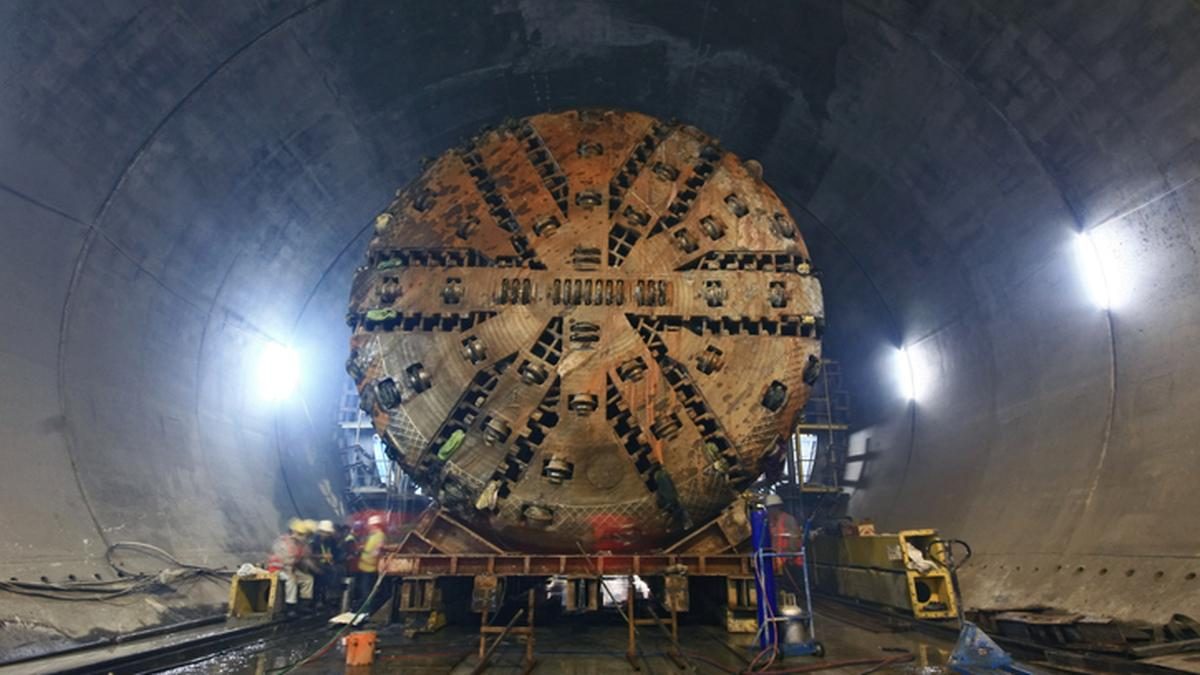
On 19 October 2026, China's Commerce Ministry announced export controls on tunnel-boring machines (TBMs) and related items, plus adjusted controls on certain dredgers and drones, effective 18 November, citing national security and non-proliferation obligations. The move came days after a 16 October draft plan to restrict exports of over 40 advanced technologies, including solar manufacturing, some AI models and biotech platforms. India, which depends on imports of TBMs for metro, rail and border tunnelling projects, has faced customs-clearance delays since 2024.
Key takeaways
- Dual-use export controls regulate goods with both civilian and military applications, usually justified by national security and non-proliferation — China's TBM and drone controls invoke this, and UPSC tests how such legal framing can mask economic coercion.
- Weaponised interdependence: states controlling critical nodes in global supply chains can use them as strategic leverage — India's import dependence on TBMs, solar tech and rare-earth-linked inputs exposes it to this.
- Contemporary example: India's metro, railway and border tunnel projects rely on Chinese-made TBMs, and Piyush Goyal raised blocked exports of a German firm's China-made TBMs in October 2024 — shows informal clearance delays preceding formal controls.
- Controls on next-generation solar manufacturing technology hit India's push to move up the value chain (PLI for solar modules, Atmanirbhar Bharat) — links trade policy to energy transition goals.
- India's responses include domestic manufacturing incentives, supply-chain diversification (Quad, Supply Chain Resilience Initiative, IPEF) and technology partnerships — standard Mains solution framework.
Conceptual analysis
Export controls are tools by which states restrict the outflow of sensitive goods, technology and software. Traditionally multilateral regimes such as the Wassenaar Arrangement, Nuclear Suppliers Group, Missile Technology Control Regime and Australia Group coordinate controls on dual-use items to prevent proliferation. China has built its own legal architecture, including the 2020 Export Control Law and a dual-use items list, and has progressively used it on gallium, germanium, graphite, rare earths and now TBMs, drones and advanced technologies. While Beijing frames these as non-proliferation and national security measures, analysts see them as leverage in an era of geoeconomic competition, where interdependence is turned into a weapon. For India, the consequences are concrete: TBMs are essential for urban metros, railway corridors and strategic border tunnels, and India has no sizeable domestic capacity, though firms such as L&T and Herrenknecht-linked units have limited local assembly. Controls on solar manufacturing technology complicate India's goal of 500 GW non-fossil capacity and domestic module-to-wafer integration. The strategic response combines building domestic capability (PLI schemes, National Manufacturing Mission, Make in India for capital goods), diversifying suppliers (Germany, Japan, South Korea), plurilateral supply-chain pacts, and diplomatic engagement through India-China dialogue mechanisms. The episode also shows the limits of WTO disciplines, since the GATT Article XXI security exception is broadly self-judging.
Concept explainers
Goods, software or technology with both civilian and military applications, such as drones and heavy tunnelling equipment.
Concept (Farrell and Newman) describing how states exploit their central position in global networks to coerce others.
A large machine that excavates tunnels with a circular cross-section, used for metros, railways and hydropower.
Multilateral export control regime for conventional arms and dual-use goods; India joined in 2017.
Security exception allowing members to take measures they consider necessary to protect essential security interests.
Efforts to prevent the spread of weapons of mass destruction and their delivery systems and related technologies.
Syllabus tags
Source: The Hindu, 19 Oct 2026
Read today's current affairs
Sign up free for daily UPSC concept cards, Prelims practice, and Mains evaluation.