Trade Margin Rationalisation under DPCO 2013: Price Regulation of Non-Scheduled Essential Drugs
What happened
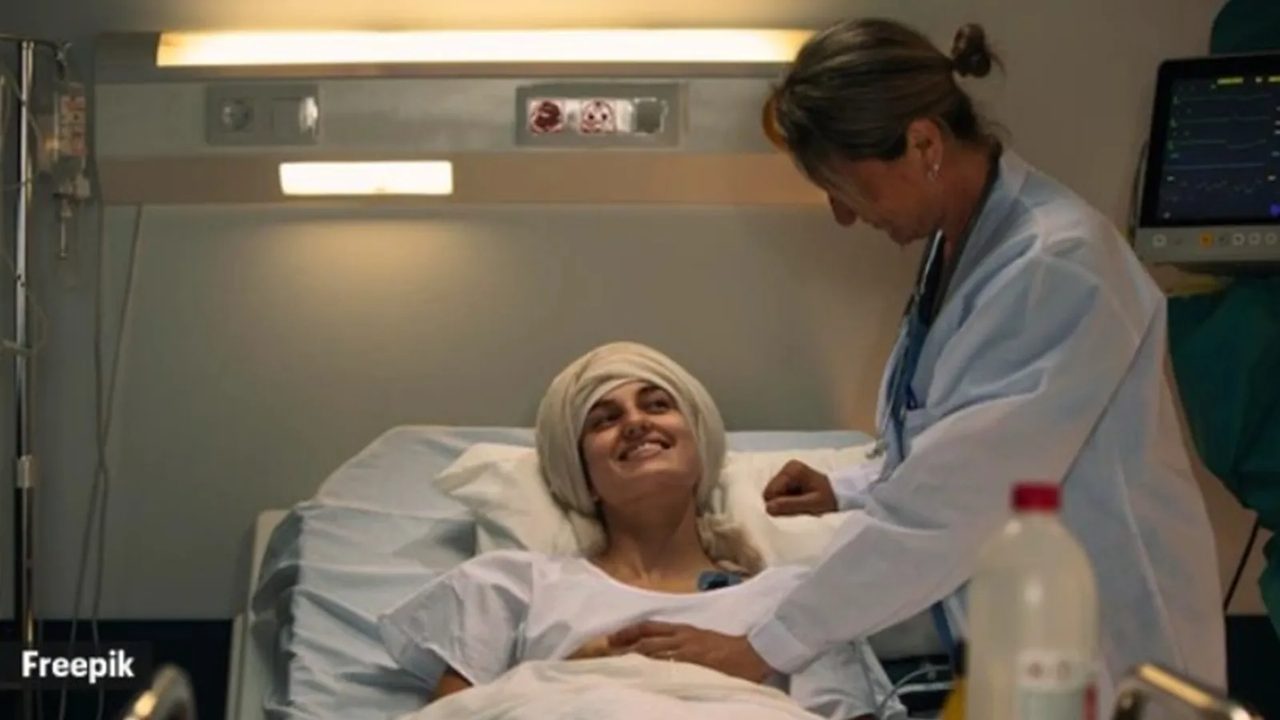
The government, through an NPPA gazette notification issued on Saturday (18 Oct 2026), capped trade margins on 137 anti-cancer drugs, including patented ones such as pembrolizumab, ribociclib and abemaciclib, at 30% of MRP (excluding GST), equal to a 42.86% mark-up on price to stockist. Manufacturers must submit revised MRPs to the NPPA within seven days, and the new prices take effect from 9 November 2026. NPPA experts found non-scheduled cancer drugs carry an average trade mark-up of about 170%, up to 700%, and expect MRP cuts of 20-70%, saving about ₹2,500 crore annually.
Key takeaways
- Trade margin rationalisation caps the gap between the price to stockist/hospital and MRP, rather than fixing a ceiling price — it is used for non-scheduled drugs where full price control is not applied; UPSC tests the difference between ceiling price and margin cap.
- Scheduled drugs (the National List of Essential Medicines) have ceiling prices under DPCO 2013, based on the simple average price of all brands with over 1% market share — non-scheduled drugs may rise up to 10% annually.
- Only about ₹2,250 crore of the ₹12,500 crore cancer drug market is under price control, so most of the market was unregulated — this shows the regulatory gap that paragraph 19 of DPCO is used to fill.
- A 30% margin on MRP equals a 42.86% mark-up on PTS (0.3/0.7) — a numeric relationship that makes for a possible Prelims-style calculation.
- The 2019 exercise cut MRPs by up to 91% and saved about ₹984 crore, while the 2026 move is expected to save about ₹2,500 crore — it shows the continuity of the policy tool and its growing scale.
Conceptual analysis
India regulates drug prices through the Drugs (Prices Control) Order, 2013, issued under the Essential Commodities Act, 1955, and administered by the National Pharmaceutical Pricing Authority (NPPA). The architecture has two tiers. Scheduled formulations, drawn from the National List of Essential Medicines (NLEM), face ceiling prices computed by a market-based method (the simple average of brands with at least 1% market share). Non-scheduled drugs are not price-fixed, but their annual MRP increase is limited to 10%. Because many high-cost oncology drugs sit outside the NLEM, large retail mark-ups developed, averaging around 170% and reaching 700%, while patients pay mostly out of pocket. Using its extraordinary powers (paragraph 19 of DPCO), the NPPA can fix or cap trade margins in public interest, as it did in 2019 for 42 cancer drugs. The 2026 notification extends this to 137 drugs with a 30% cap on MRP at first point of sale. The design ensures that firms whose existing MRP is lower retain it, preventing perverse upward revisions. Merits include lower out-of-pocket expenditure, which is a leading cause of impoverishment, and consistency with Universal Health Coverage goals. Concerns include possible supply disruptions, reduced stockist incentives, effects on innovation and patented drugs, and potential litigation. A stronger long-term answer lies in expanding NLEM coverage, strengthening public procurement, Jan Aushadhi, and insurance coverage like Ayushman Bharat.
Concept explainers
National Pharmaceutical Pricing Authority, set up in 1997 under the Department of Pharmaceuticals to fix and revise drug prices and monitor availability.
Drugs (Prices Control) Order, 2013, issued under the Essential Commodities Act, introduced market-based pricing for NLEM drugs.
Scheduled drugs are those listed in the NLEM, and ceiling prices apply to them. Non-scheduled drugs have no fixed price but are limited to a 10% annual MRP increase.
The difference between the price at which a manufacturer sells to a stockist, hospital or distributor and the MRP charged to consumers.
Price to Stockist or Price to Distributor, which is the manufacturer's net sales divided by quantity sold.
National List of Essential Medicines, a list of drugs, issued by the Health Ministry, that are considered essential for priority healthcare needs.
Syllabus tags
Source: Indian Express, 17 Oct 2026
Read today's current affairs
Sign up free for daily UPSC concept cards, Prelims practice, and Mains evaluation.