Technology Export Controls as Economic Statecraft: China's Curbs on Solar Manufacturing Technology and India's Clean-Energy Supply Chain Vulnerability
What happened
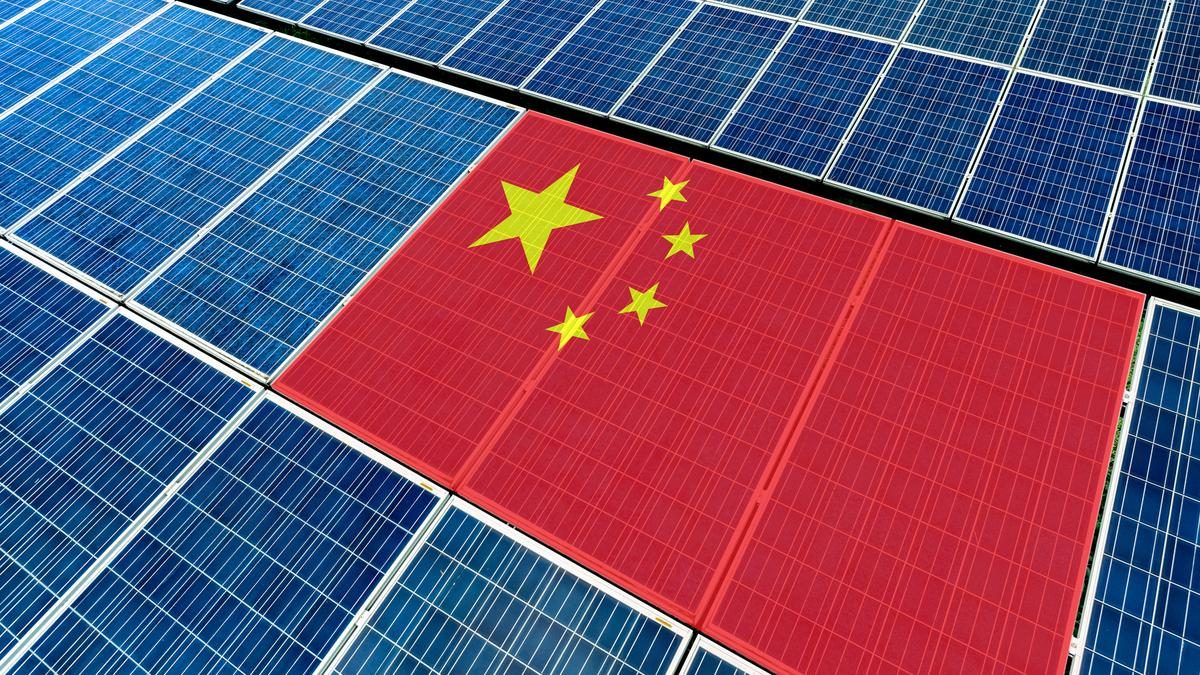
On Friday, 16 October 2026, China's Ministry of Commerce proposed adding 12 photovoltaic manufacturing technologies to its export-control list, citing national security and growing solar use in aerospace and defence. The proposal would ban technologies such as perovskite and tandem cells, some thin-wafer processes and large-scale fluidized-bed polysilicon production, and restrict (not prohibit) TOPCon, HJT and XBC cell technologies. Exporters must register certain overseas technology transfers until the catalogue is updated, and public consultation closes on 15 November. Reuters has reported that China has already curbed such exports to India.
Key takeaways
- Export controls on dual-use technology let states restrict transfers on national security grounds; solar tech is now framed as dual-use (aerospace, defence) — shows how civilian clean-tech enters strategic trade control regimes.
- China dominates the solar value chain (polysilicon, wafers, cells, modules) — this concentration gives it leverage, and UPSC tests supply-chain dependence as a risk to energy security.
- The tiered design (ban on frontier tech like perovskite-tandem and fluidized-bed polysilicon; restriction on TOPCon/HJT/XBC) — illustrates calibrated controls that protect the technological lead while keeping equipment trade going.
- Contemporary example: reported curbs on technology flow to India hamper India's push under PLI for solar modules and its 500 GW non-fossil capacity target by 2030, exposing limits of 'Atmanirbhar' without technology access.
- Technology denial is a tool of geoeconomics, similar to US chip controls and rare-earth restrictions — links to the weaponisation of interdependence and the need for diversified partnerships.
Conceptual analysis
Export controls are regulatory instruments by which states restrict the outward transfer of goods, software and technology, traditionally for non-proliferation and national security under regimes such as the Wassenaar Arrangement. Increasingly they are used as instruments of economic statecraft to protect industrial leadership. China's proposal to list 12 solar-manufacturing technologies follows its earlier controls on rare earths, graphite and battery-related technologies, and reflects a pattern: after building global dominance in a sector, it guards the know-how that sustains that lead. The justification of 'sensitive uses' in aerospace and defence brings solar technologies into the dual-use category, giving the measures legal cover. The tiering is strategic: next-generation technologies (perovskite, tandem, fluidized-bed polysilicon) are banned outright, while mature but advanced cell technologies (TOPCon, HJT, XBC) face licensing. For India, the effect is significant. India has strong module-assembly capacity but remains dependent on imported cells, wafers, polysilicon and equipment, mostly Chinese. Policies like the PLI scheme for high-efficiency modules, ALMM and customs duties aim to build backward integration, but these need technology and machinery. Curbs raise costs, delay timelines and threaten the 2030 renewable targets and energy-transition credibility. The policy response involves R&D in perovskite and tandem cells, technology partnerships with the US, EU, Japan and Korea, trusted supply chains through initiatives like the Quad and iCET, and critical-mineral diplomacy. The episode underlines that energy transition is not only environmental but also a contest over technology and supply chains.
Concept explainers
Government regulation restricting or licensing the export of specified goods, technologies or software, usually for security or strategic reasons.
Technology with both civilian and military applications, therefore subject to strategic trade controls.
Perovskite is an emerging cell material with high efficiency potential; tandem cells stack perovskite on silicon to capture more of the solar spectrum.
A cheaper, more energy-efficient method of making polysilicon than the dominant Siemens process.
Advanced high-efficiency crystalline-silicon cell architectures: Tunnel Oxide Passivated Contact, Heterojunction, and back-contact cells.
Use of a country's central position in global supply or finance networks to coerce others.
India's production-linked incentive to build integrated manufacturing from polysilicon to modules.
Syllabus tags
Source: The Hindu, 18 Oct 2026
Read today's current affairs
Sign up free for daily UPSC concept cards, Prelims practice, and Mains evaluation.