Public Procurement and Infrastructure Development in India
What happened
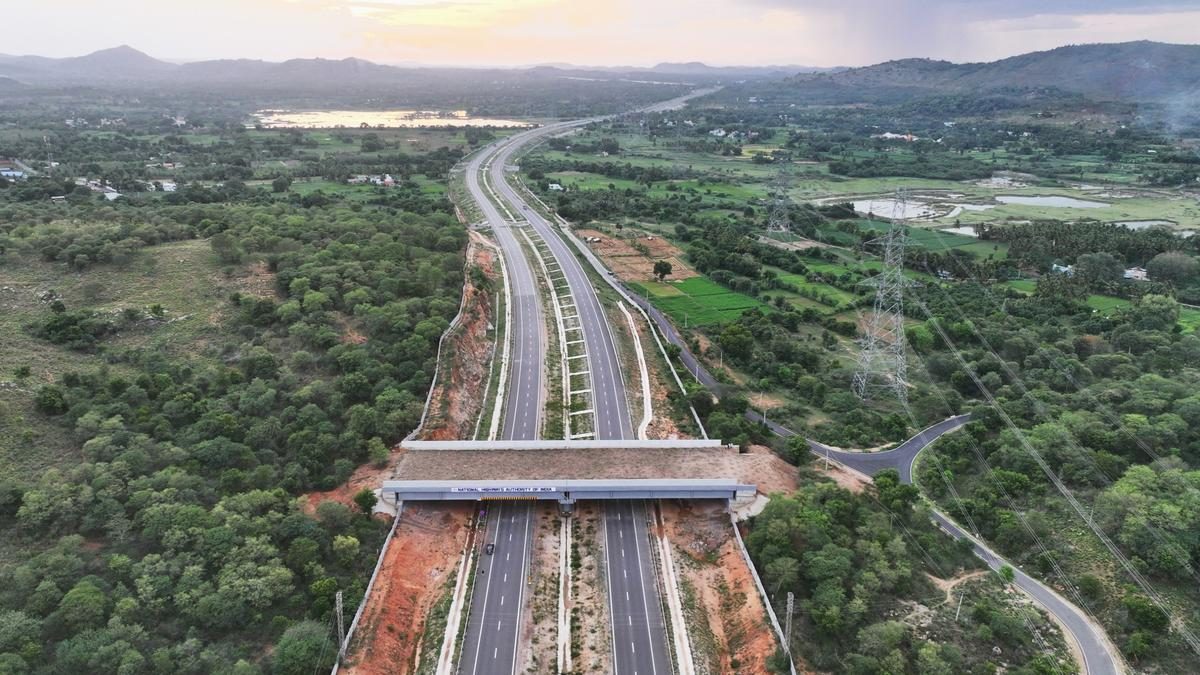
The National Highways Authority of India (NHAI) terminated its contract with D.P. Jain for the Arakkonam-Kancheepuram stretch of the Bengaluru-Chennai Expressway after 15 months of delays. Fresh tenders have been issued to complete the remaining works at a cost of ₹633.12 crore, with a new contractor required to maintain the stretch for five years. This follows the company's failure to complete the project on time, having finished only 53.56% of the work.
Key takeaways
- Public procurement refers to the process by which government agencies purchase goods and services — [It is crucial for ensuring transparency, efficiency, and accountability in the use of public funds.]
- Infrastructure development is essential for economic growth and connectivity — [It facilitates trade, improves access to services, and enhances the quality of life for citizens.]
- The Engineering, Procurement, and Construction (EPC) model is commonly used in large infrastructure projects — [It allows for a single contractor to be responsible for all aspects of project delivery, which can streamline processes and reduce delays.]
- Termination of contracts in public procurement can occur due to non-performance or delays — [This emphasizes the need for contractors to adhere to timelines and quality standards to avoid financial penalties and loss of future contracts.]
- The NHAI's actions reflect the challenges faced in large-scale infrastructure projects in India — [These challenges include bureaucratic hurdles, contractor performance issues, and the need for timely completion to meet public expectations.]
Conceptual analysis
Public procurement and infrastructure development are critical components of India's economic framework, impacting growth, connectivity, and public welfare. The recent termination of the contract with D.P. Jain by the NHAI for the Bengaluru-Chennai Expressway highlights the importance of accountability and performance in public contracts. The NHAI's decision to issue fresh tenders under the EPC model underscores the need for efficient project management and timely completion of infrastructure projects. The EPC model allows for a streamlined approach, where a single contractor is responsible for engineering, procurement, and construction, thus minimizing delays and ensuring accountability. However, the challenges faced, such as contractor performance issues and bureaucratic hurdles, can significantly affect project timelines and public expectations. As India continues to invest in infrastructure, understanding the dynamics of public procurement becomes essential for fostering transparency and efficiency in the utilization of public funds.
Concept explainers
The process by which government entities purchase goods and services, ensuring transparency and efficiency.
The construction and improvement of foundational services and facilities such as roads, bridges, and public transport.
A project delivery method where a single contractor is responsible for all aspects of a project, from design to construction.
The legal process of ending a contract due to non-performance, delays, or other breaches of agreement.
Syllabus tags
Source: The Hindu, 04 Sep 2026
Read today's current affairs
Sign up free for daily UPSC concept cards, Prelims practice, and Mains evaluation.