Judicial Review under Article 226 and Court-Directed CBI Probes: Custodial Violence, Federalism and Section 6 of the DSPE Act
What happened
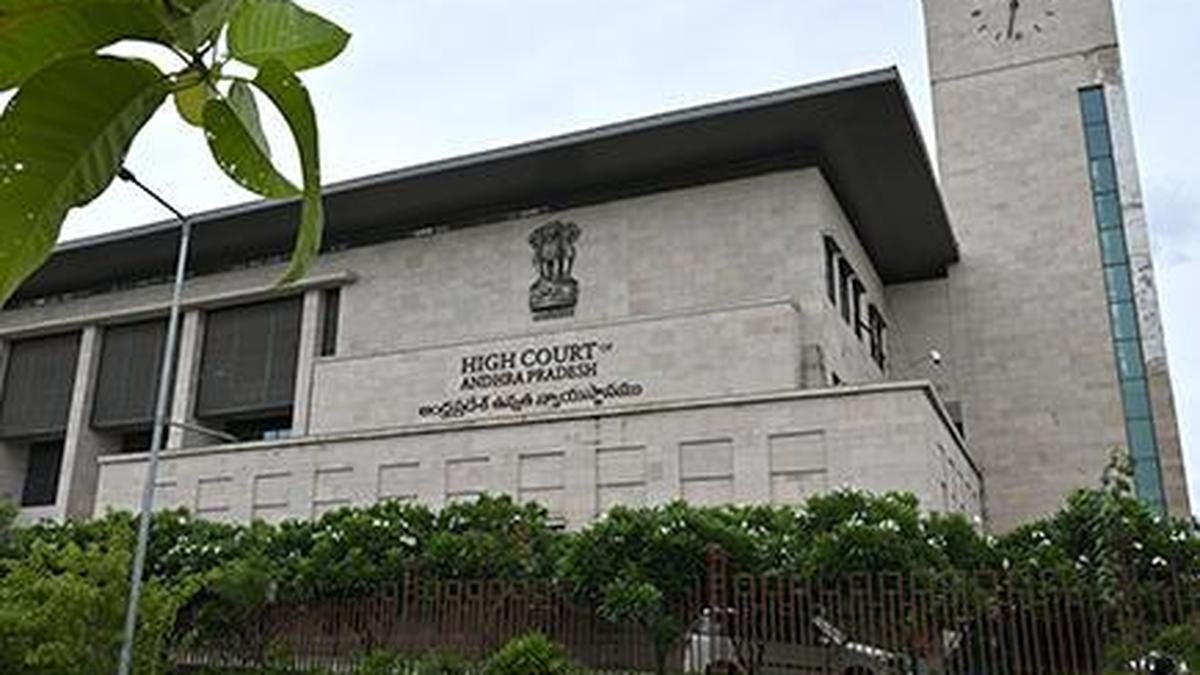
The Andhra Pradesh High Court, through a Division Bench of Justices Ravinath Tilhari and Alapati Giridhar, held in the Gade Sai Krishna custodial death case that it was an extraordinary situation warranting a CBI probe. The Bench ruled that Section 6 of the Special Police Establishment Act cannot dilute the HC's Article 226 powers, and that directing a CBI probe does not breach separation of powers or federalism. It also suggested preventive reforms against custodial violence, including police training, monitoring and FIR record-keeping safeguards.
Key takeaways
- Article 226 empowers High Courts to issue writs for enforcing fundamental rights and for 'any other purpose' — the Bench held this power cannot be curtailed by Section 6 of the DSPE Act, a statute; UPSC tests the hierarchy of constitutional power over statute
- Section 6 of the DSPE Act, 1946 requires State consent for the CBI to investigate within a State — constitutional courts can nonetheless direct a CBI probe, a recurring theme in the federalism debate (State v. Union)
- Courts order CBI probes only in 'exceptional circumstances' to ensure a fair investigation, as in State of West Bengal v. Committee for Protection of Democratic Rights (2010), where a Constitution Bench held that such directions do not violate federal structure
- Custodial violence violates Article 21 (life and dignity) and Article 20(3)/22 safeguards; the court called it a 'calculated assault on human dignity', echoing D.K. Basu v. State of West Bengal (1997) guidelines
- Contemporary example: the court suggested remedial measures (compensation) and preventive measures (police reorientation, tamper-proof FIR, inquest and post-mortem records) as a two-pronged strategy
Conceptual analysis
The concept at stake is the extent to which constitutional courts can override statutory consent regimes to ensure impartial investigation, particularly where the State's own police are accused. The CBI derives its powers from the Delhi Special Police Establishment Act, 1946. Section 5 allows the Centre to extend its jurisdiction to States, but Section 6 requires the State government's consent. Since policing and public order are State subjects (List II, Seventh Schedule), this consent requirement is seen as protecting federalism. Several States have recently withdrawn general consent. However, the Supreme Court in the West Bengal (2010) Constitution Bench decision held that Articles 32 and 226 are part of the basic structure and that the judiciary can direct a CBI probe without State consent, though sparingly and only in exceptional situations where credibility and confidence in the investigation is at stake. The Andhra Pradesh High Court applied this reasoning to a custodial death, reasoning that when accused officers belong to the State police, a State-run investigation risks conflict of interest. It also placed custodial torture within Article 21's dignity jurisprudence, and the State's positive duty to protect rights, even of witnesses. The suggested reforms mirror the D.K. Basu guidelines, Law Commission's 273rd Report on torture, and police reform directions in Prakash Singh (2006). The episode shows the tension between cooperative federalism and rights enforcement, and the continuing gap between legal safeguards and police practice, with India yet to ratify the UN Convention Against Torture.
Concept explainers
Gives High Courts power to issue writs to enforce fundamental rights and for any other purpose, wider than the Supreme Court's Article 32.
Statute governing the CBI; Section 6 requires State consent for CBI to exercise powers in a State.
Doctrine dividing functions among legislature, executive and judiciary, to prevent overreach by any one.
Torture or ill-treatment of a person in police or judicial custody, violating Article 21.
Serious offence for which police can arrest without warrant and investigate without court permission.
1997 Supreme Court directions on arrest and detention procedures to prevent custodial abuse.
Inquiry into the cause of an unnatural or suspicious death, usually by a magistrate or police.
Syllabus tags
Source: The Hindu, 17 Oct 2026
Read today's current affairs
Sign up free for daily UPSC concept cards, Prelims practice, and Mains evaluation.