Index Provider Classification (MSCI Market Tiers), Free Float and Passive Capital Flows
What happened
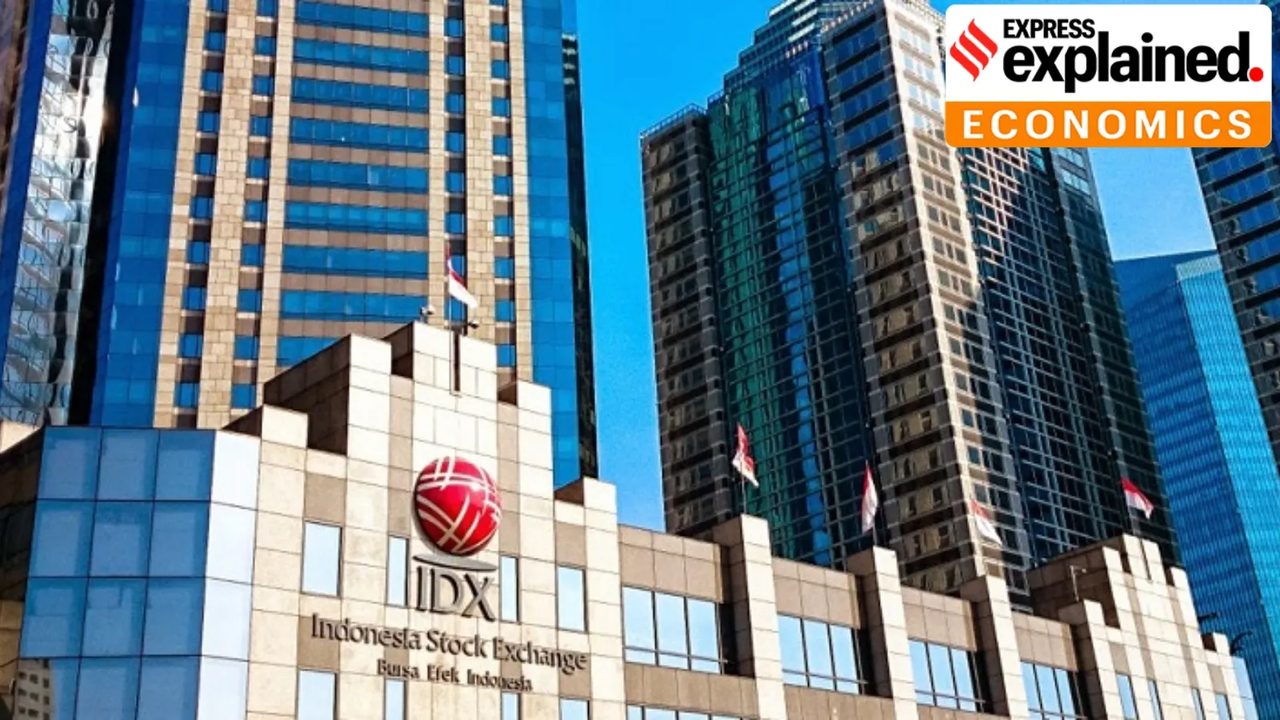
On Friday, 16 October, global index provider MSCI announced its intention to downgrade Indonesia from emerging market to 'standalone' status, citing opaque shareholding, unreliable free-float data and suspected coordinated trading. The Jakarta Composite Index fell 8% at opening and closed 11.6% lower, its worst day in nearly 30 years, and is down almost 40% in 2026. Indonesia had fined three companies about $117 million for market manipulation that week, but MSCI judged reforms insufficient.
Key takeaways
- MSCI classifies markets into four tiers (developed, emerging, frontier, standalone) based on market accessibility, size and liquidity — UPSC tests how external private agencies shape capital flows to countries
- Free float is the share of a company's stock actually available for public trading, excluding promoter and strategic holdings — index weights depend on it, so opaque ownership distorts weights and price discovery
- Passive funds track indices mechanically, so a reclassification forces automatic selling or exclusion irrespective of fundamentals — this explains the sharp one-day crash and links to FPI flows and volatility
- Concerns such as coordinated trading and weak disclosure reflect market-integrity and regulatory-credibility gaps (comparable to SEBI's role in India) — a recurring Mains theme on capital market regulation
- Contemporary example: Indonesia's JCI fell 11.6% in a day after the downgrade intention, the worst performing market globally in 2026
Conceptual analysis
Global equity index providers such as MSCI, FTSE Russell and S&P Dow Jones construct benchmarks that trillions of dollars of passive and benchmark-linked funds track. MSCI sorts countries into developed, emerging, frontier and standalone categories using criteria like market accessibility, size, liquidity, foreign ownership limits and ease of capital movement. Inclusion in a prominent index, especially the MSCI Emerging Markets Index, attracts steady passive inflows, lowers cost of capital and improves investor confidence. Exclusion or downgrade does the reverse: funds mandated to track the index must sell, and active managers lose their benchmark anchor, leading to sharp outflows and price falls. Central to the Indonesian case is free float, the proportion of shares genuinely available to public investors. Where ownership is concentrated or hidden through nominee structures, reported free float overstates tradable supply, which makes prices easier to manipulate and liquidity illusory. Suspected coordinated trading compounds the problem by inflating volume artificially. The episode shows that regulatory transparency, data reliability and enforcement are as important as macro fundamentals for sustaining portfolio inflows. For India, the lesson is relevant: its weight in MSCI EM indices is large, and SEBI's disclosure norms, minimum public shareholding rules and curbs on manipulation sustain its credibility. It also highlights the structural dependence of emerging economies on external private gatekeepers, creating vulnerability to sudden stops in capital flows, currency pressure and contagion to peers.
Concept explainers
Formerly Morgan Stanley Capital International, a major provider of global equity indices used as benchmarks by funds.
Portion of a company's shares readily available for public trading, excluding promoters, governments and strategic holders.
MSCI category for markets not meeting inclusion criteria for the main EM or frontier indices, such as Zimbabwe, Ukraine and Lebanon.
Strategy of mechanically replicating an index rather than selecting stocks, so flows follow index changes.
Smaller, less liquid and less accessible markets than emerging ones, but with growth potential.
Artificial influence on prices or volumes, e.g. via coordinated trading, which regulators penalise.
Syllabus tags
Source: Indian Express, 17 Oct 2026
Read today's current affairs
Sign up free for daily UPSC concept cards, Prelims practice, and Mains evaluation.