Impact of Free Trade Agreements on India's Textile Industry
What happened
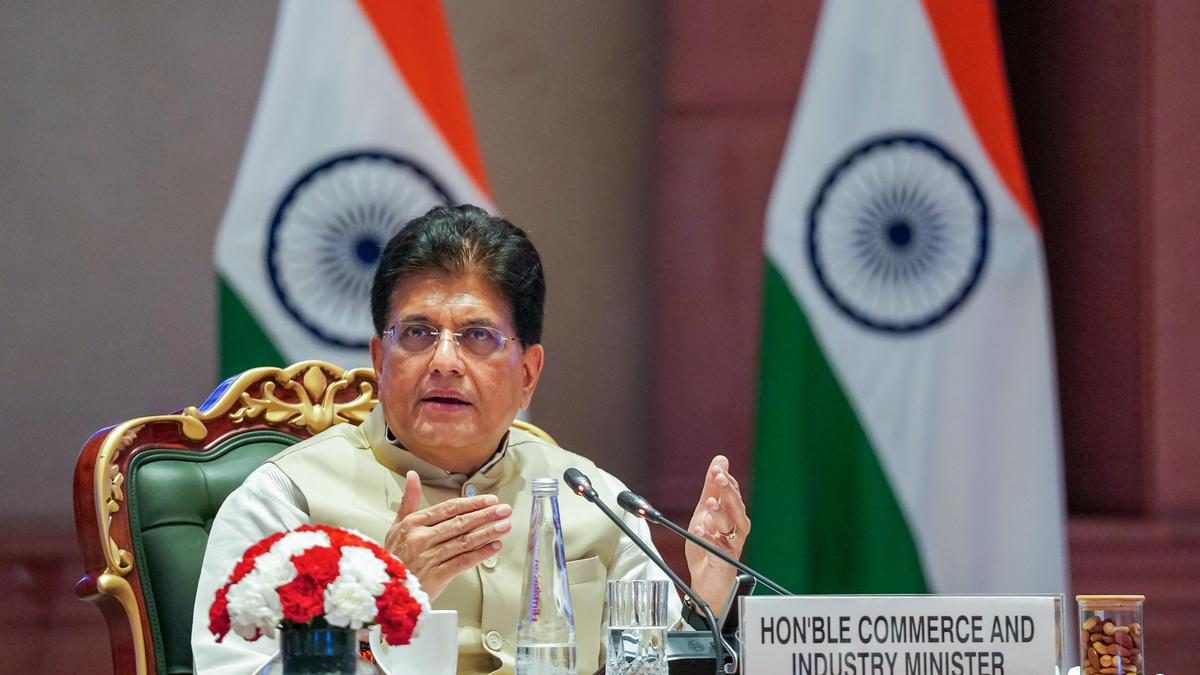
Commerce Minister Piyush Goyal addressed a national workshop on 'Leveraging FTAs' on October 10, 2023, stating that India's textile industry can no longer attribute its poor export performance to external factors. He highlighted that India's free trade agreements (FTAs) now provide competitive tariff advantages compared to key competitors like Bangladesh and Vietnam, allowing for better access to developed markets.
Key takeaways
- Free Trade Agreements (FTAs) reduce tariffs on exports — This allows countries like India to compete more effectively in global markets.
- India's textile sector has historically struggled against competitors benefiting from lower tariffs — Understanding this dynamic is crucial for evaluating India's trade policies.
- The expansion of India's FTAs aims to cover 75% of global trade — This strategic move is significant for enhancing India's export potential.
- The shift in tariff structures in developed nations now favors Indian textiles — This change indicates a potential turnaround for the sector's performance.
- Minister Goyal's emphasis on performance reflects a shift in accountability for the textile industry — This highlights the importance of domestic industry responsiveness to global trade opportunities.
Conceptual analysis
The concept of Free Trade Agreements (FTAs) plays a pivotal role in shaping the landscape of international trade, particularly for developing economies like India. FTAs are treaties between two or more countries that aim to reduce or eliminate trade barriers, such as tariffs and quotas, thereby facilitating smoother and more cost-effective trade. In the context of India's textile industry, Commerce Minister Piyush Goyal's recent remarks underscore a significant shift in the competitive dynamics of global trade. Historically, Indian textiles faced challenges due to higher tariffs compared to competitors like Bangladesh and Vietnam, which benefitted from their status as least-developed countries (LDCs) and favorable trade agreements. However, with the expansion of India's FTAs, which now encompass countries accounting for a substantial portion of global GDP, Indian textiles are positioned to gain preferential access to these markets. This strategic move not only enhances India's export potential but also places the onus of performance squarely on the domestic industry. As India continues to negotiate and implement more FTAs, the textile sector must leverage these advantages to improve its competitiveness and performance in the global market.
Concept explainers
A treaty between two or more countries to facilitate trade by reducing or eliminating tariffs and other trade barriers.
A tax imposed by a government on imported goods, which can affect the price and competitiveness of those goods in the domestic market.
A classification by the United Nations for countries that exhibit the lowest indicators of socioeconomic development.
A measure of how well a country's goods and services perform in international markets.
Syllabus tags
Source: The Hindu, 03 Sep 2026
Read today's current affairs
Sign up free for daily UPSC concept cards, Prelims practice, and Mains evaluation.