Article 370 and Political Rights in Jammu and Kashmir
What happened
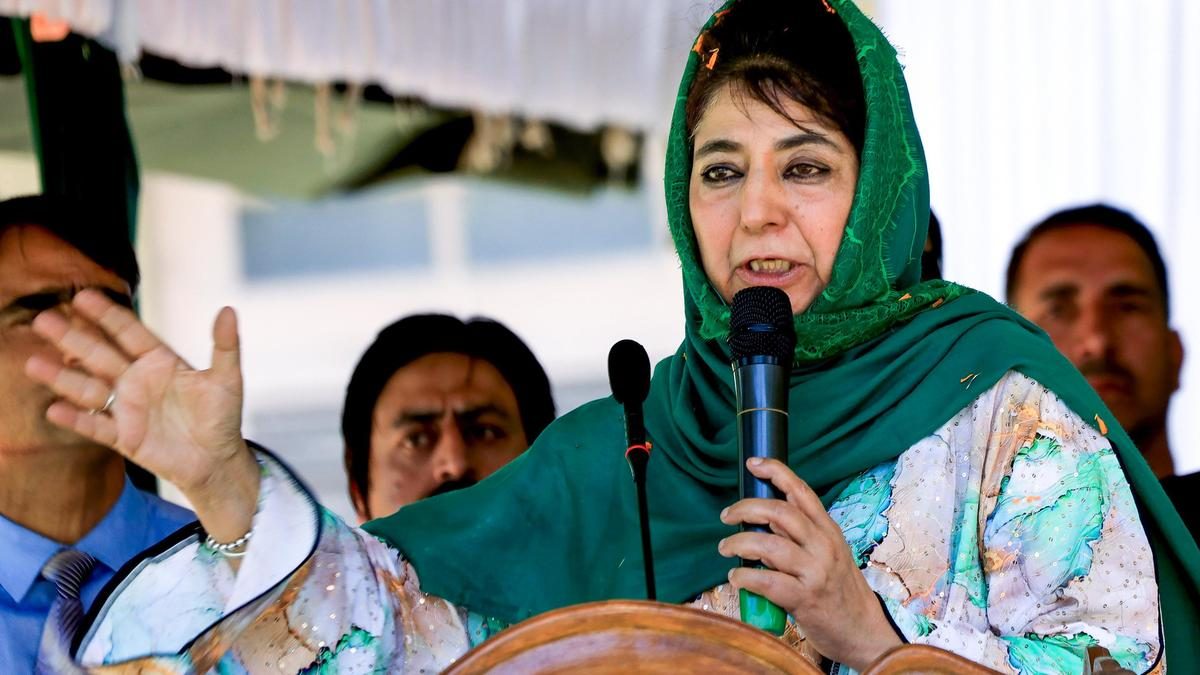
On July 18, 2026, the Peoples Democratic Party (PDP) announced that it would only join a protest organized by the National Conference if the agenda included the restoration of Article 370, the release of political prisoners, and the lifting of the ban on Jamaat-e-Islami. PDP president Mehbooba Mufti criticized the focus on statehood alone, arguing it would legitimize the revocation of Jammu and Kashmir's special status.
Key takeaways
- Article 370 granted special autonomy to Jammu and Kashmir, allowing it to have its own constitution and laws — [This is significant as it highlights the unique status of Jammu and Kashmir within India and the implications of its revocation.]
- The revocation of Article 370 in August 2019 was seen as a controversial move that stripped Jammu and Kashmir of its special status — [This event is crucial for understanding the current political dynamics and the ongoing demands for restoration of rights in the region.]
- Political rights in Jammu and Kashmir have been a contentious issue, with various parties advocating for the restoration of autonomy and addressing the grievances of local populations — [This reflects the broader theme of political representation and rights in the context of federalism in India.]
- The PDP's insistence on including the restoration of Article 370 in protest agendas underscores the party's stance on preserving regional identity and rights — [This reveals the ongoing struggle for political representation and the significance of regional parties in shaping local governance.]
- Mehbooba Mufti's remarks about the protest being a 'grave injustice' if it solely focuses on statehood illustrate the deep-seated sentiments regarding the historical context of Jammu and Kashmir's political status — [This highlights the emotional and historical dimensions of political rights in the region.]
Conceptual analysis
Article 370 of the Indian Constitution, which granted special status to Jammu and Kashmir, has been a focal point of political discourse since its revocation in August 2019. This article allowed the region to maintain its own constitution and laws, distinguishing it from other Indian states. The revocation was met with widespread criticism and has led to ongoing debates about political rights and representation in Jammu and Kashmir. The Peoples Democratic Party (PDP), led by Mehbooba Mufti, has been vocal about the need to restore Article 370, arguing that any demand for statehood alone undermines the historical rights of the people. Mufti's recent statements emphasize the importance of addressing broader issues of autonomy and political representation, reflecting the complex interplay between regional identity and national governance. The current political climate in Jammu and Kashmir illustrates the challenges faced by local parties in advocating for the rights of their constituents while navigating the larger framework of Indian federalism. As political tensions continue, the demand for the restoration of Article 370 remains a significant aspect of the discourse surrounding governance and rights in the region.
Concept explainers
A provision in the Indian Constitution that granted special autonomy to Jammu and Kashmir, allowing it to have its own laws and constitution.
Rights that allow individuals to participate in the political process, including the right to vote, run for office, and engage in political activities.
The status of being a state within a federation, which includes having a certain degree of autonomy and governance.
A socio-political organization in Jammu and Kashmir that has been involved in various political and social movements in the region.
Syllabus tags
Source: The Hindu, 18 Jul 2026
Read today's current affairs
Sign up free for daily UPSC concept cards, Prelims practice, and Mains evaluation.