Advancements in Space Technology: ISRO's EOS-05 Launch
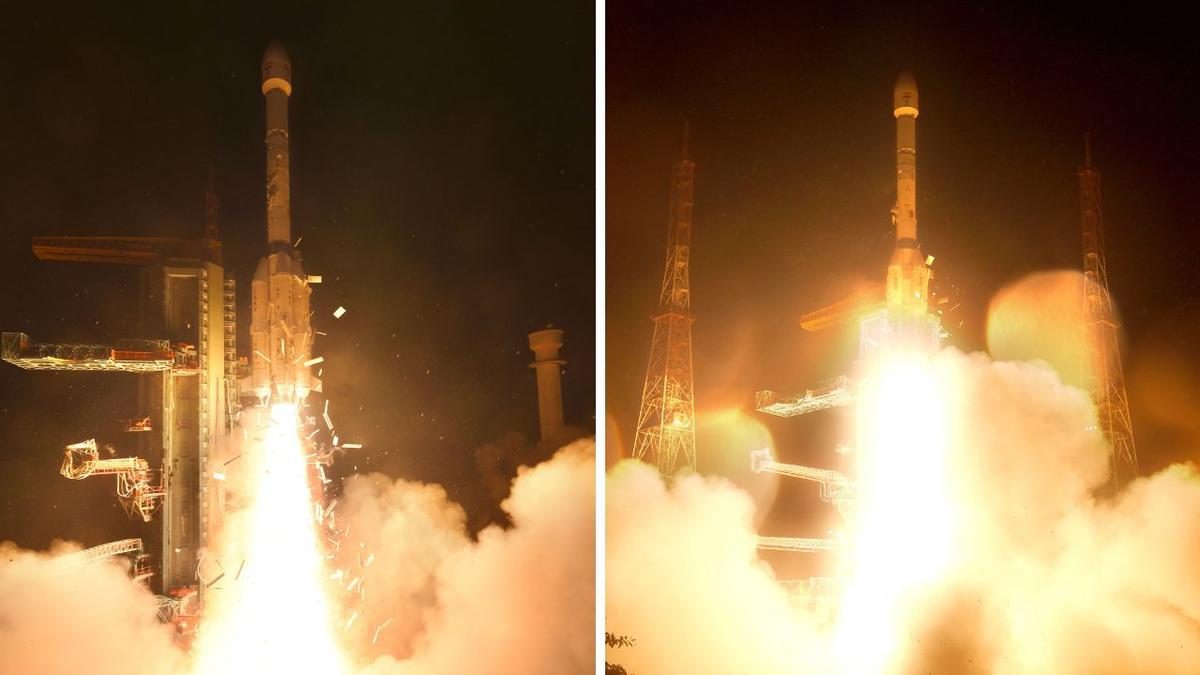
What happened
On September 4, 2026, the Indian Space Research Organisation (ISRO) successfully launched the Earth observation satellite EOS-05 using the Geosynchronous Satellite Launch Vehicle (GSLV-F17) from the Satish Dhawan Space Centre in Sriharikota. This marks the 19th flight of the GSLV and the satellite is notable for being India's first imaging satellite to operate from Geosynchronous orbit, approximately 36,000 km above Earth.
Key takeaways
- ISRO's EOS-05 is the first dedicated imaging satellite from Geosynchronous orbit — This highlights India's advancements in space technology and its ability to monitor Earth from a significant altitude.
- The GSLV-F17 successfully launched a payload of 2367 kg, showcasing improvements in ISRO's launch vehicle capabilities — This reflects the evolution of India's space technology and its increasing payload capacity.
- The operationalization of EOS-05 is expected to provide strategic data for national activities — This emphasizes the importance of satellite technology in supporting national security and development.
- The launch signifies the growing partnership between ISRO and the Indian industry — This indicates a shift towards a more collaborative approach in enhancing India's space capabilities.
Conceptual analysis
The successful launch of the EOS-05 satellite by ISRO represents a significant milestone in India's space exploration and technology development. As India's first imaging satellite to operate from Geosynchronous orbit, EOS-05 is designed to provide advanced imaging capabilities across various spectral bands, including visible, infrared, multi-spectral, and hyperspectral. This capability is crucial for applications in agriculture, forestry, land-use planning, and disaster management, thereby enhancing India's ability to monitor and respond to environmental changes. The GSLV-F17, which carried the satellite, demonstrated the advancements in ISRO's launch vehicle technology, as it successfully deployed a heavier payload than previous missions. The collaboration between ISRO and the Indian industry is also noteworthy, as it signifies a broader strategy to enhance domestic capabilities in space technology. This launch not only showcases India's growing prowess in space but also its commitment to leveraging space technology for national development and security.
Concept explainers
An orbit around the Earth where a satellite appears to remain stationary relative to a fixed point on the Earth's surface.
Geosynchronous Satellite Launch Vehicle, a launch vehicle developed by ISRO to deploy satellites into geosynchronous orbits.
A technique that captures and processes information from across the electromagnetic spectrum, allowing for detailed analysis of materials.
Syllabus tags
Source: The Hindu, 04 Sep 2026
Read today's current affairs
Sign up free for daily UPSC concept cards, Prelims practice, and Mains evaluation.