Adjournment Sine Die vs Prorogation: Summoning, Sessions and the Six-Month Rule (Article 85)
What happened
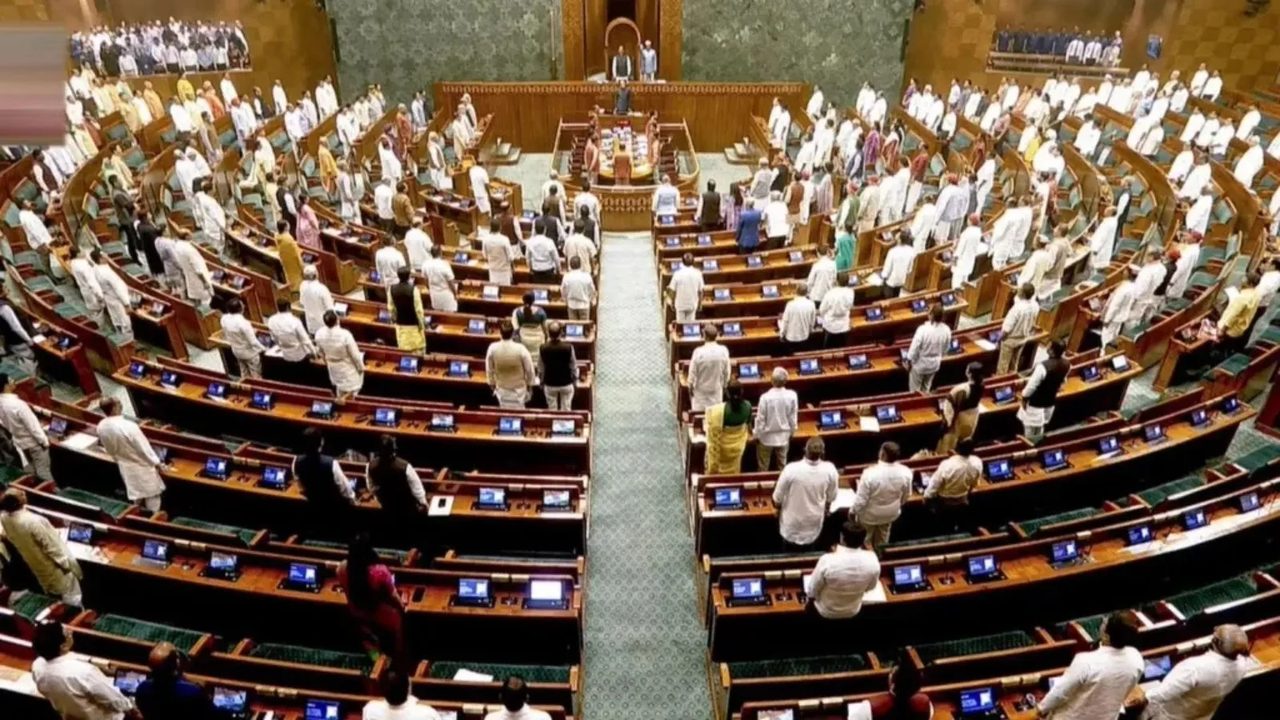
As reported on 22 November 2026, Parliament's adjournment sine die since the Monsoon Session ended on 13 August crossed 100 days (101st day), the longest in parliamentary history. The session has not been prorogued, which fuels speculation about a short special sitting, possibly as a second part of the Monsoon Session, to push the government's 'delimitation package' including 33% women's reservation. Government sources say the Winter Session is on track and that it has the two-thirds numbers needed for a Constitutional amendment.
Key takeaways
- Article 85 empowers the President to summon Parliament, prorogue Parliament and dissolve the Lok Sabha; no more than six months may separate two sittings of Parliament — this fixes the outer limit on any gap and is a common Prelims fact
- Adjournment sine die ends a sitting without fixing a return date and is decided by the presiding officer; prorogation ends a session and is done by the President by notification — the difference is a classic Prelims trap
- If a House is adjourned sine die but not prorogued, the session technically survives, so the Speaker can reconvene it at short notice (Rule 15, Lok Sabha Rules) — this gives the executive flexibility, and raises accountability questions
- Pending business such as Bills in the Lok Sabha survives adjournment and prorogation but lapses on dissolution (with exceptions, such as Bills pending in the Rajya Sabha) — tests parliamentary procedure
- Contemporary example: the 101-day gap since 13 August 2026 is the longest, with a Constitutional amendment needing special majority (two-thirds of those present and voting, plus a majority of total membership) under Article 368
Conceptual analysis
India's Constitution leaves the scheduling of Parliament to the executive. Article 85 lets the President, on the advice of the Union Council of Ministers, summon each House and prorogue it, subject to one hard constraint: six months must not pass between the last sitting of one session and the first sitting of the next. There is no fixed calendar, though by convention there are three sessions a year: Budget, Monsoon and Winter. A sitting can end in several ways: adjournment to a specific time, adjournment sine die (without a date for resumption) by the presiding officer, prorogation by the President, or dissolution of the Lok Sabha. Adjournment suspends the sitting only, while prorogation terminates the session. After prorogation, a fresh summons is required, and the government may also promulgate ordinances (Article 123) only when Parliament is not in session, so a long un-prorogued adjournment has bearing on this. Because an un-prorogued House technically remains in session, the Speaker can reconvene it quickly, and the government can add a short sitting without the usual notice of about 15 days. This flexibility helps in urgent legislation, but a long gap reduces scrutiny, deliberation and executive accountability, and critics may see it as being used for tactical convenience. The present controversy involves a possible Constitutional amendment on delimitation and women's reservation, which requires a special majority under Article 368, making attendance and numbers politically important. The episode illustrates the tension between executive control of the parliamentary calendar and Parliament's role as a continuous check on government.
Concept explainers
Termination of a sitting without naming a date for the next meeting; ordered by the presiding officer of the House.
Ending of a session by the President's notification under Article 85(2); it follows adjournment sine die and precedes a fresh summons.
The President's call to members to meet, under Article 85(1), acting on Cabinet advice.
Article 85(1) requires that the gap between the last sitting of one session and the first sitting of the next must be under six months.
Majority of total House membership and two-thirds of members present and voting, needed for most Constitutional amendments.
Ending of the life of the Lok Sabha, after which pending Lok Sabha Bills lapse; Rajya Sabha is a permanent House and is not dissolved.
Syllabus tags
Source: Indian Express, 22 Nov 2026
Read today's current affairs
Sign up free for daily UPSC concept cards, Prelims practice, and Mains evaluation.